Taxes: Their Effects on Production
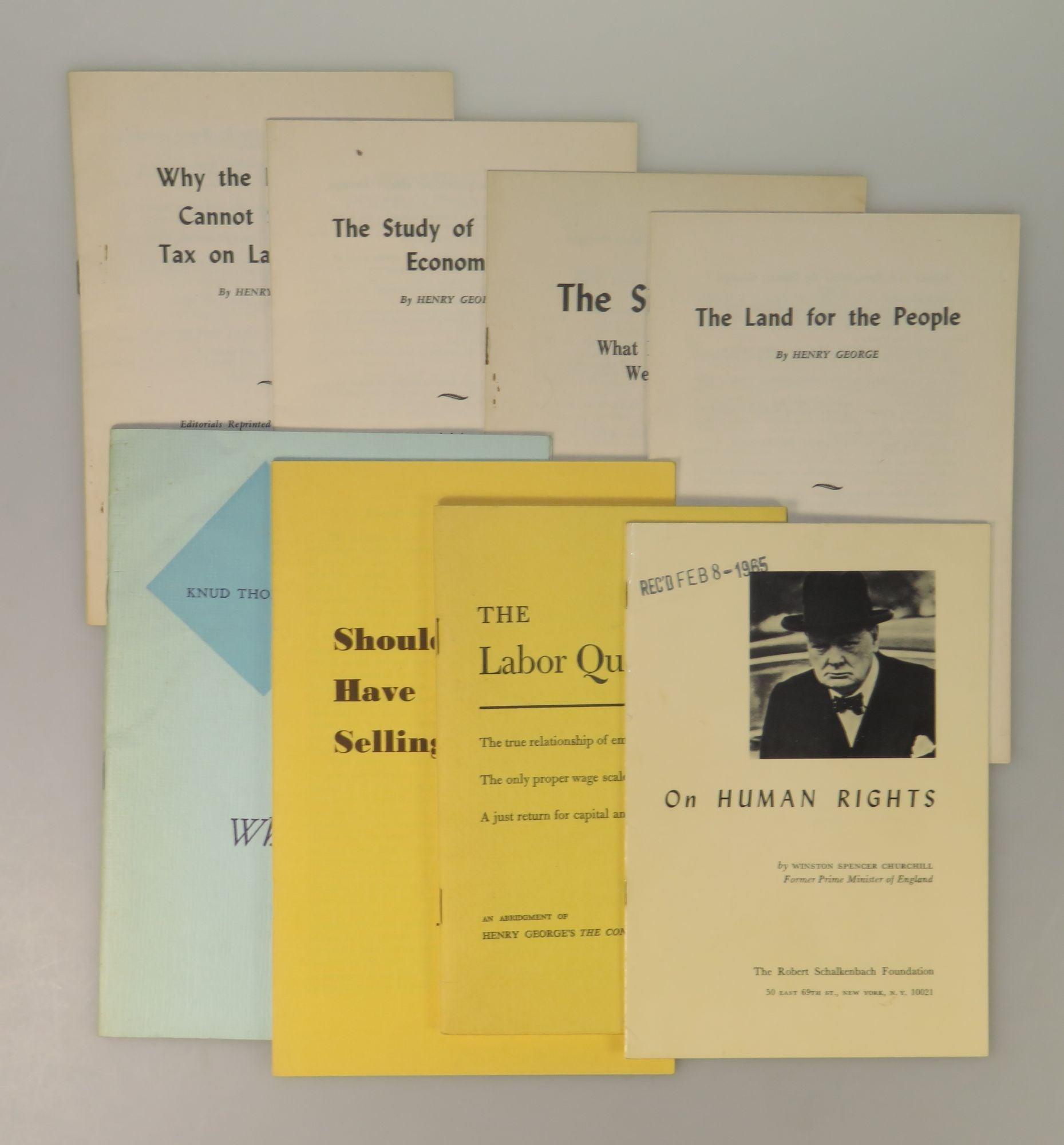
Understanding the impact of taxes on production is essential for grasping the economic theories proposed by Henry George, a 19th-century economist who argued that taxes on labor and capital impede the production process, while those on land do not.
The Ethics of Property
Heralding a progressive outlook on property rights, Henry George challenged conventional views by questioning the moral justifications of private land ownership, particularly when it contributes to social inequality.
The Ethics of Taxation
George's evaluation of taxation extends beyond economics into the realm of ethics, where he considers how taxes should be levied to promote justice and economic efficiency.
The Incidence of Taxation
Central to George's argument is the incidence of taxation, or who ultimately bears the burden of a tax, and his advocacy for a shift towards land value taxation to relieve the economic pressures on labor and capital.
Some Implications of the Single Tax
The Single Tax, George's most significant proposal, entails taxing the unimproved value of land. This concept aims to reduce speculative activities and promote a fairer distribution of wealth.
Speculation: Land vs. Products
George differentiated between speculation in land, which he viewed as unproductive and harmful, and speculation in products, which can be an essential component of a dynamic economy.
The Importance of Land
In the political economy of Henry George, the significance of land is paramount. Geographically fixed and supply-limited, it holds a unique status that warrants its distinctive treatment in taxation.
The Single Tax
The Single Tax system postulates that taxing the value of land can fund public expenditures, leading to a more equitable society without the inefficiencies caused by taxes on labor and capital.
Adam Smith's Philosophy on Taxation

A profound inspection of Adam Smith's principles reveals a remarkable alignment with Henry George's perspective, especially regarding the taxation of land's rental value as an equitable fiscal approach.
Introduction to Adam Smith's Taxation Views
Adam Smith is renowned for delineating the "invisible hand" of the market, yet his notions on taxation—with equity, certainty, convenience, and simplicity at their core—have been largely overshadowed, despite their ongoing relevance.
Taxation in Smith's Economy
Smith's exhaustive discourse on taxation in "The Wealth of Nations" underscores his disapproval of the prevailing tax systems and highlights the absence of modern tax legislators' engagement with his work.
Adam Smith and Henry George: A Philosophical Congruence
The analysis of Smith's taxation chapter alongside the principles of Henry George suggests Smith's tacit endorsement of a land rent-based tax system, reflecting a commonality in their economic philosophies that champions the Single Tax.
Travel and Economic Perspectives
As travelers traverse the globe, they participate in a complex economic dance influenced by principles like those of Henry George and Adam Smith. From the occupancy taxes in hotels to the value of land that hosts these establishments, the fiscal footprint of a traveler is imbued with the echoes of these economic theories. Understanding the subtleties of the political economy can enrich one's appreciation of the myriad costs and contributions that travel encompasses, illuminating the invisible symphony of market forces and state interventions that orchestrate our adventures abroad.
Puerto Rico (Gran Canaria)
- Servatur Puerto Azul
- Gloria Palace Amadores Thalasso & Hotel
- Ocean Hill Gran Canaria
- Marina Suites Gran Canaria
- Colina Mar Apartments
- Gloria Palace Royal Hotel & Spa
- Morasol Suites Gran Canaria
- Sol Y Paz Apartments
- Gran Canaria Puerto Rico
Playa del Ingles (Gran Canaria)
- Hd Parque Cristobal Gran Canaria
- Gran Canaria Princess
- Abora Continental By Lopesan Hotels
- Hl Miraflor Suites
- Labranda Hotel Marieta
- Sol Barbacan Gran Canaria
- Green Field Gran Canaria
- Hotel Neptuno
- Playa Del Ingles
San Agustin (Gran Canaria)
- Paradisus Gran Canaria
- Abora Interclub Atlantic
- Don Gregory By Dunas
- Gloria Palace San Agustin
- San Agustin Gran Canaria
Maspalomas (Gran Canaria)
- Salobre Hotel Resort & Serenity
- Club Maspalomas Suites & Spa
- Riu Palace Meloneras
- Vistaflor Bungalows
- Maspalomas Gran Canaria Holidays