The Philosophical Legacy of Henry George

At the dawn of the 20th century, a progressive economic thinker emerged, whose ideas still resonate in the chambers of public discourse and policy-making. Henry George, a self-taught economist, journalist, and political candidate, captivated the minds of many with his fervent belief in the common ownership of land. His seminal work, "Progress and Poverty," published in 1879, questioned the moral foundations of land ownership and proposed a single tax on land values as a solution to the growing disparity between wealthy landowners and the impoverished masses.
Herbert Spencer: A Critique
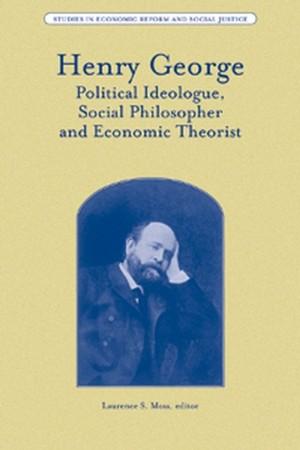
Devoted to refining his theories, George penned "The Philosopher" in 1892, where he critically dissected the views of Herbert Spencer, another influential social philosopher of the time. George's incisive analysis showcased his unique blend of economic theory and moral philosophy, underscoring the need for societal reforms that prioritized human welfare over unbridled capitalism.
The Unfinished Magnum Opus
George's intellectual journey did not culminate with his critique of Spencer. He embarked on a grander endeavor with "The Science of Political Economy," an ambitious work aimed at laying out a comprehensive framework for understanding economics. Although his untimely death in 1897 left the manuscript unfinished, the portions he completed offer a window into his progressive thoughts on wealth, production, and distribution. His untiring zeal for economic reform was evident until his last breath, running for Mayor of New York to rally the public behind his visionary ideas.
The Ripple Effects of George's Work
Over a century has passed, yet Henry George's legacy continues to be a source of inspiration for economists, policymakers, and social reformers. His advocacy for a land value tax is echoed in contemporary discussions on housing justice, urban development, and fiscal policy. His ideas challenged the status quo, offering a blueprint for a society that places human dignity and equitable resource distribution at the forefront of its economic system.
Travel and George's Vision of the Economy
It's intriguing to consider how George's vision intertwines with the travel industry. The transient nature of travel reflects the fluid philosophy George held about land ownership, with hotels serving as temporary custodians of space for the journeying individual. The hospitality realm, in essence, encapsulates a microcosmic view of George's ideals—a symphony of transient ownership, shared resources, and equitable access to the richness of diverse locales. As wanderlust compels us to explore the world, we engage with George's principles, often unknowingly, participating in an economy that celebrates mobility and the universal right to discover and engage with the world around us.
Puerto Rico (Gran Canaria)
- Servatur Puerto Azul
- Gloria Palace Amadores Thalasso & Hotel
- Marina Suites Gran Canaria
- Colina Mar Apartments
- Ocean Hill Puerto Rico
- Babalu Gran Canaria
- Puerto Rico Gran Canaria
Playa del Ingles (Gran Canaria)
- Hd Parque Cristobal Gran Canaria
- Princess Hotel Gran Canaria
- Abora Continental
- Mur Hotel Neptuno
- Buenos Aires Gran Canaria
- Green Field Hotel Gran Canaria
- Hl Suitehotel Playa Del Ingles
- Gran Canaria Playa Del Ingles
San Agustin (Gran Canaria)
- Paradisus Gran Canaria
- Abora Interclub Atlantic By Lopesan Hotels
- Hotel Orquidea Gran Canaria
- Gloria Palace San Agustin Thalasso & Hotel Photos