Introduction: The Trap of Stereotyping

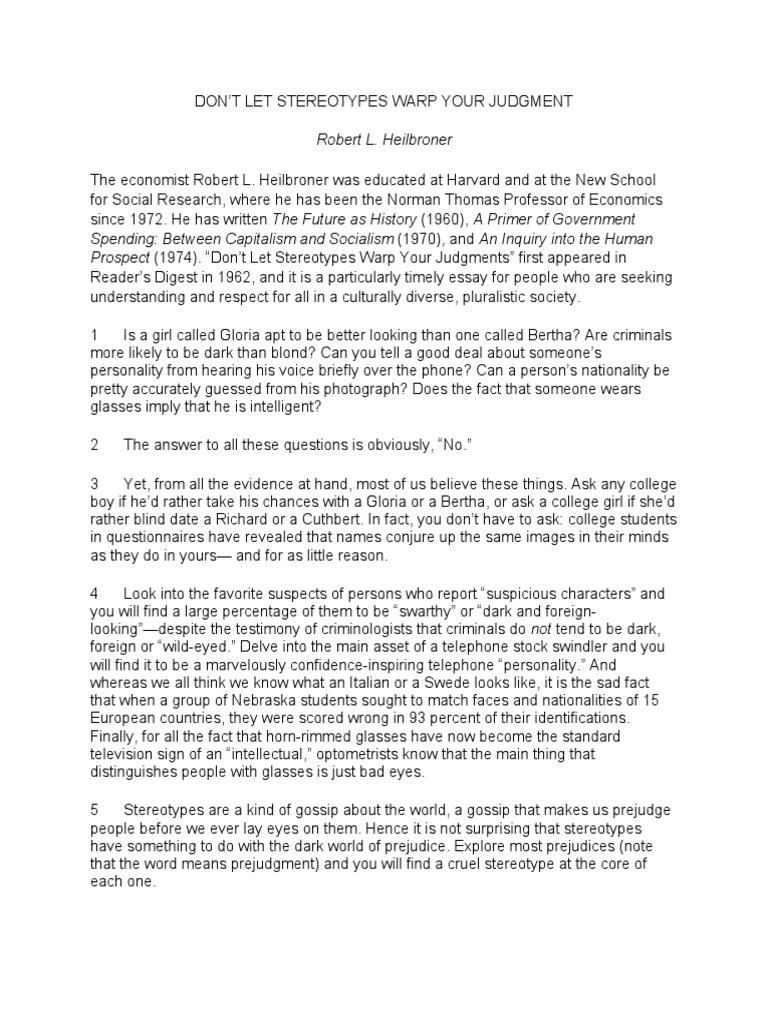
In navigating a world brimming with a rich variety of people, cultures, and experiences, it's all too easy to succumb to the simplicity of stereotypes. Yet the danger lies in allowing these preconceived notions to dictate our judgments and interactions. This issue is eloquently tackled in the contemplative essay titled "Don’t Let Stereotypes Warp Your Judgments" by Robert L. Heilbroner, whose ideas resonate with the transcendental wisdom of Bhaktivinoda Thakura, a 19th-century spiritual thinker from India.
Understanding Stereotypes and Their Impact
Stereotypes are the mental shortcuts and generalizations we make about groups of people; they often emerge out of a mixture of past experiences, cultural narratives, and societal influences. While they may appear harmless or even instinctual, they have a far-reaching impact, particularly when they result in prejudiced attitudes or discriminatory behavior.
The Consequences of Stereotyping
When we allow stereotypes to warp our judgments, we reduce individuals to mere caricatures of who they truly are, stripping away their inherent complexity and humanity. This not only disrespects the person in question but also limits our capacity to connect genuinely and learn from one another.
The Philosophical Parallels with Bhaktivinoda Thakura
The correlation between Heilbroner's essay and the teachings of Bhaktivinoda Thakura becomes apparent when we consider the universal message of looking beyond superficiality. Bhaktivinoda Thakura advocated for seeing the spiritual essence of all beings, which transcends external attributes and social labels, a view that inherently opposes the act of stereotyping.
Transcendence Through Understanding
Bhaktivinoda Thakura's philosophy encourages a deeper understanding of ourselves and others, one that rises above preconceived biases and embraces a more empathetic and enlightened perspective. This aligns with Heilbroner's assertion that recognizing and dismantling stereotypes is essential for fair and unbiased judgment.
Breaking the Shackles of Stereotypes
Freedom from the shackles of stereotypes is liberating. It removes barriers to authentic interaction and enriches our lives with a diversity of experiences and perspectives. But how do we break free from these deeply ingrained patterns of thought?
Tools for Change

Education and self-reflection serve as powerful tools in this endeavor. By actively learning about different cultures, histories, and individual stories, we increase our awareness and naturally begin to question our assumptions. Coupled with introspection and the will to change, this learning path paves the way towards a more inclusive and non-judgmental approach to the world around us.
Leveraging Travel to Expand Perspectives
Encounters with new places and cultures provide an effective antidote to the poison of stereotypes. Travel exposes us to the nuance and interwoven complexities of humanity, fostering a greater understanding and, in turn, inspiring us to shed layers of prejudice.
The Role of Hospitality in Fostering Connection
Hotels, as intersections of cultures and people from all walks of life, offer a unique platform for these encounters. Through their hospitality, they not only provide a place of rest but also serve as microcosms of the world where guests and staff hold the potential to exchange ideas, challenge biases, and broaden their worldviews. This open environment encourages visitors to appreciate the richness of diversity beyond the stereotypes they may carry with them.
In conclusion, examining our prejudices and striving to overcome them, akin to the teachings of Bhaktivinoda Thakura and the insights of Robert L. Heilbroner, leads to more equitable interactions and a deeper appreciation of the tapestry of human experience. Travel, and the places we lodge along the way, only enhance this journey of discovery, pushing us beyond the comfort zone of our preconceptions to a place where we embrace the world and its people in their full, vibrant complexity.
Puerto Rico (Gran Canaria)
- Servatur Puerto Azul
- Gloria Palace Amadores Thalasso & Hotel
- Marina Suites Gran Canaria
- Ocean Hill Gran Canaria
- Colina Mar Apartments
- Gloria Palace Royal
- Maracaibo Aparthotel
- Holidays To Puerto Rico
Playa del Ingles (Gran Canaria)
- Hd Parque Cristobal Gran Canaria
- Abora Continental By Lopesan Hotels
- Gran Canaria Princess
- Riu Palace Palmeras
- Hotel Neptuno Gran Canaria
- Mur Aparthotel Buenos Aires
- Sol Barbacan Gran Canaria
- Playa Del Ingles Holidays