The Multifaceted Nature of Foreign Intervention

In the collective international consciousness, the story of Haiti is often painted with the broad brushstrokes of humanitarian aid, political instability, and the fervent cries for intervention. The global response to the nation's crises often manifests itself through a polarity reminiscent of literature's most famous split personality: Dr. Jekyll and Mr. Hyde. This metaphor encapsulates the dualities of foreign involvement, as the same entities that provide relief and support can also be viewed as intruding forces with their own agendas.
Understanding the Jekyll and Hyde of Humanitarian Aid
To fully grasp the connection between the beneficial and potentially detrimental impacts of aid, one must delve deeper into the complexities of intervention. What is evident is the crucial link between the benefactor and the unintended conqueror personas. Critics argue that this duality can undermine the sovereignty and self-determination of a nation, particularly when international actors fail to engage with the local context and impose their solutions.
Answering the Hard Questions

Advocates like Margolis, who support interventionist campaigns under the banner of "saving Haiti from the Haitians," must confront a series of challenging questions. They are tasked with justifying the incursion on national autonomy and explaining the long-term plans for enabling Haitian self-sufficiency. As history has shown, the pattern of repetitive aid without substantial institutional transformation often leads to dependency rather than development.
The Imperative for Balanced Engagement
For ongoing intervention to transition from a Mr. Hyde-esque disruption to a Dr. Jekyll-like healing force, there must be an alignment with Haiti's own vision for its future. International strategies should not only involve immediate relief but also sustainable practices that empower Haitian leaders and communities, ensuring that aid becomes a collaborative, rather than a paternalistic, endeavor.
Travel and Development: An Intertwined Reality
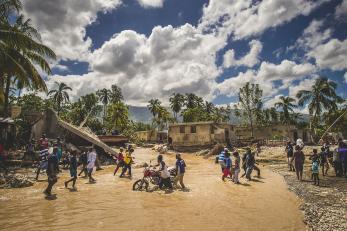
Intriguingly, the same duality that shadows foreign aid also touches the realms of travel and hospitality. Where interventionism pushes and pulls between benevolence and control, tourism oscillates between economic boost and cultural homogenization. Travelers seeking to experience Haiti's rich culture can inadvertently become part of a cycle that influences local development. The choices made by visitors, from accommodations to excursions, hold the power to impact and shape communities, just as foreign aid does.
Thus, it becomes a shared responsibility for those traveling to Haiti or any country facing similar challenges to engage responsibly. This involves supporting locally-owned businesses and being mindful of one's footprint on both the natural environment and the sociocultural fabric. The parallel narratives of intervention and tourism converge on the point that every action, intentional or not, contributes to the shaping of a nation's future. As spectators and participants in this global theater, our awareness and choices decide the role we play in the story of countries like Haiti.
Puerto Rico (Gran Canaria)
- Servatur Puerto Azul
- Gloria Palace Amadores Thalasso & Hotel
- Marina Suites Gran Canaria
- Colina Mar Apartments
- Ocean Hill Puerto Rico
- Babalu Gran Canaria
- Puerto Rico Gran Canaria
Playa del Ingles (Gran Canaria)
- Hd Parque Cristobal Gran Canaria
- Princess Hotel Gran Canaria
- Abora Continental
- Neptuno Gran Canaria
- Buenos Aires Gran Canaria
- Green Field Hotel Gran Canaria
- Hl Suitehotel Playa Del Ingles
- Gran Canaria Playa Del Ingles
San Agustin (Gran Canaria)
- Paradisus Gran Canaria
- Abora Interclub Atlantic By Lopesan Hotels
- Hotel Orquidea Gran Canaria
- Gloria Palace San Agustin Thalasso & Hotel Photos