Who Was François Quesnay?

A figure of monumental importance in the history of economic thought, François Quesnay remains influential centuries after his time. Born in 1694, Quesnay was a French economist and physician who is most notably known for founding the Physiocratic school of thought. This revolutionary perspective posited that the wealth of nations was derived from the value of "land agriculture" and that agricultural products should be highly priced.
The Path of a Thought Leader
François Quesnay's journey to prominence was as notable as his intellectual contributions. Starting his career as a surgeon, Quesnay gained fame and eventually became the personal physician to the King’s mistress, Madame de Pompadour. His access to such high-profile figures allowed his economic ideas to circulate among the French elite, lending him an influential platform.
The Tableau Économique
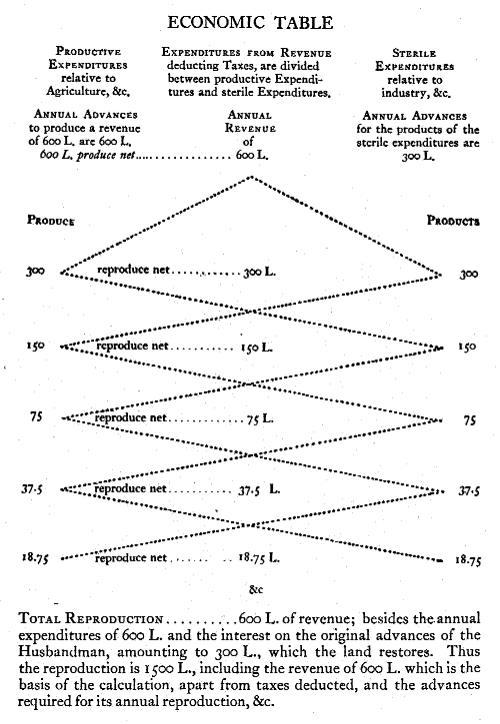
One of Quesnay's most significant contributions to economics was his Tableau Économique (Economic Table), which highlighted the flow of capital and goods in an economy. This pioneering work laid the foundation for the Input-Output analysis used in economics today and is considered an early forerunner of modern economic models.
The School of Cooperative Individualism
Quesnay's influence extended beyond just his own works. He was a central figure in the School of Cooperative Individualism, a philosophy that espoused both the protection of individual liberty and property rights alongside the suggestion that the economy operated best with minimal intervention from the government, particularly in the agricultural sector. This school of thought has contributed significantly to discussions of free trade and laissez-faire economics.
Legacy and Relevance of Quesnay’s Thoughts
Even today, the insights of François Quesnay reverberate through the field of economics. His ideas about the natural order of the economy and the primacy of land in wealth creation continue to be studied by economic scholars and enthusiasts, underpinning many principles of contemporary economic policies.
Traveling in the Footsteps of Enlightenment Thinkers
Ironically, the ideas of Physiocracy emphasized stability and the fixed nature of land as a source of wealth, but today, travelers continuously seek new experiences and knowledge across the globe. The burgeoning travel industry, with its plethora of hotels and destinations, owes a nod to the interconnectedness of the modern economy, a concept Quesnay might have appreciated in context. As enthusiasts journey across countries, they participate in a global exchange of wealth, ideas, and culture, mirroring the economic flows Quesnay depicted in his groundbreaking tableau.
As we continue to travel and explore, we carry the legacy of thinkers like Quesnay with us. Each journey is a testament to the complexities and wonders of the economic principles that govern our world, from the agricultural fields that remain foundational to economies to the urban landscapes that teem with exchange and cooperation. In this way, travel is not just a leisure activity but also an embodiment of economic discovery and the living tableau of human activity.
Puerto Rico (Gran Canaria)
- Servatur Puerto Azul
- Gloria Palace Amadores Thalasso & Hotel
- Marina Suites Gran Canaria
- Ocean Hill Gran Canaria
- Gloria Palace Royal Hotel & Spa
- Colina Mar
- Aparthotel Maracaibo
- Holidays To Puerto Rico
Playa del Ingles (Gran Canaria)
- Hd Parque Cristobal Gran Canaria
- Abora Continental By Lopesan Hotels
- Gran Canaria Princess
- Labranda Hotel Marieta
- Hotel Riu Palace Palmeras
- Playa Del Ingles
San Agustin (Gran Canaria)
- Paradisus Gran Canaria
- Abora Interclub Atlantic
- Corallium Beach By Lopesan Hotels
- Bull Costa Canaria
- San Agustin Gran Canaria
Maspalomas (Gran Canaria)
- Salobre Hotel Resort & Serenity
- Club Maspalomas Suites & Spa
- Hotel Riu Palace Meloneras
- Vistaflor Bungalows
- Gran Canaria Maspalomas Holidays